
If you’ve ever felt daunted while trying to spell or say the word electroneuromyography, you’re not alone. With 21 letters and nine syllables, it’s a bulky medical term with a spelling bee vibe. Even Dr. Richard P. Nielsen, a pioneer in the field and co-founder of Rocky Mountain University of Health Professions (RMU), acknowledges this.
“When you look at that word, it’s really intimidating,” Dr. Nielsen said in an interview with RMU’s The Pulse podcast. “When you break it down, it’s a little bit easier to digest. ‘Electro’ is electricity. ‘Neuro’ is nerve. ‘Myo’ is muscle. And ‘ography’ is the study of.”
Voila. Let’s try again. Electroneuromyography. Easy peasy. The abbreviation rolls off the tongue much easier: EMG. It’s also called ENMG and electrophysiology.
Though somewhat of a “best kept secret” diagnostic tool, Dr. Nielsen is a big advocate of EMG. He describes it as potentially being “the gateway to getting better.”
What Is EMG?
The definition of the powerful healthcare tool is simple.
“It’s the electrical study of nerve and muscle,” Dr. Nielsen explained. “EMG is a diagnostic study. It’s not a treatment.”
Electroneuromyographers, one of nine board-certified specialties within physical therapy, can precisely pinpoint underlying issues that are causing a variety of symptoms by tapping into the body’s nervous and muscular symptoms using high-tech electrical pulses. Patients with numbness, tingling, pain, weakness and burning sensations in nerves and muscles are possible candidates for EMG.
“Once I see a patient and determine what is or what isn’t going on with them, then I can effectively refer the patient out to another provider or send them back to the referring physician or provider, saying, ‘Hey, this is what’s going on with the patient,’” he said. “It really helps.”
How EMG Testing Works
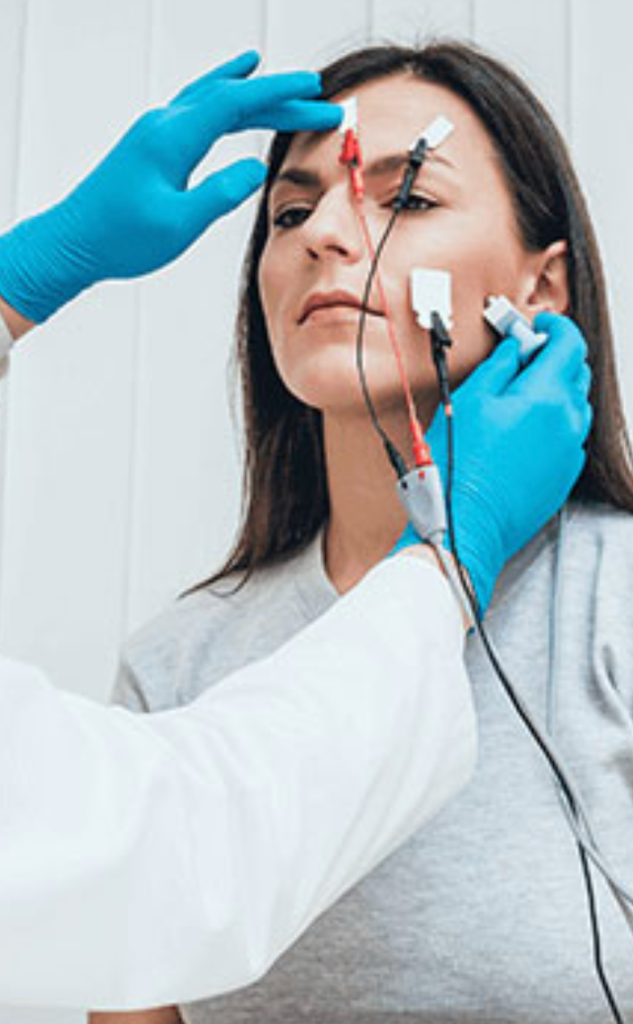
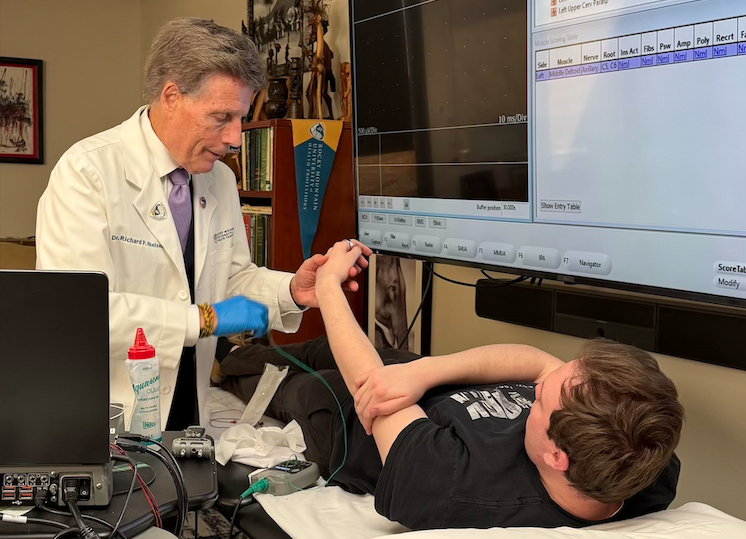
EMG testing is a nerve conduction study that uses surface electrodes on the skin to send small electrical pulses through the affected area and back. Thin needle electrodes are also inserted into muscles and records electrical activity at rest and during contraction. A doctor or technician records the signals (waves and sounds) on a monitor, and a diagnosis is made by evaluating the data.
Patients can proceed with treatment, if necessary, with doctors, surgeons, podiatrists, physical therapists, or other healthcare providers.
It’s not to be confused with electrotherapy, which is a useful treatment that produces electric stimulation through patches and probes in physical therapy settings.
Real-World Impact
EMG provides objective data that goes beyond a doctor’s hunch. It confirms or rules out conditions like carpal tunnel syndrome, pinched nerves, radiculopathy, or neuromuscular disorders. This accuracy is crucial for effective treatment plans.
Insurance companies increasingly require EMG studies before approving certain treatments or surgeries.
“If you just make the diagnosis on clinical suspicion and treat them for that, then the patient’s not going to get better,” Dr. Nielsen said.
By identifying exactly what’s happening or not happening, EMG ensures resources go toward the right interventions, saving time, money, and frustration for patients.
Why It’s Exciting for Practitioners
For healthcare professionals, especially physical therapists specializing in clinical electrophysiology, EMG is a rewarding field and leads to clarity and a pathway to healing for patients.
“EMG is really the gateway to getting better,” Dr. Nielsen said. “This is the best secret in medicine. It truly is, because in electrophysiology, you get to exercise everything you learn at all levels of your professional (PT) training—anatomy, physiology, pathophysiology, biomechanics, arthrokinematics, all those things.”
There are only about 225 board-certified EMG specialists in the U.S., including approximately 30 who earned their degrees at RMU. It’s an industry with tremendous growth opportunity.
If You’re Experiencing Symptoms
If numbness, tingling, unexplained pain, weakness, or burning affects your daily life, talk to your doctor about whether an EMG could help clarify the picture. It’s a straightforward, evidence-based step toward targeted care.
Thanks to experts like Dr. Nielsen, what may sound intimidating is accessible and valuable—even if it’s hard to say or spell at first.