
Experiencing blurry close-up vision as you age can be annoying, no doubt. One day, you’re a thirtysomething who can read anything just fine, even the fine print. The next day, you’re in your 40s, squinting at fuzzy letters on screens and buying reading glasses in bulk.
But the underlying reason is actually quite common for middle-aged adults. It’s called presbyopia.
This widespread eye condition affects nearly 2 billion people worldwide and about 130 million Americans over age 45, according to the American Optometric Association (AOA).
What is Presbyopia?
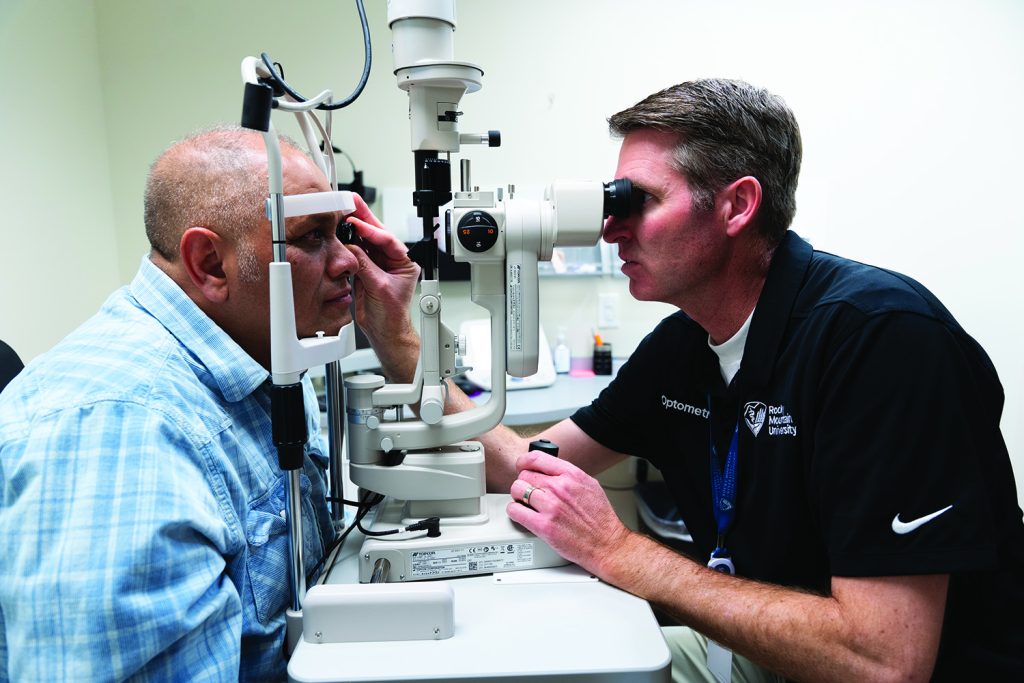
Simply put, eyes eventually struggle to focus on close things because our lenses become more rigid as we get older. This age-related farsightedness typically arrives around age 40, leading people to stretch out their arms and look like they’re playing the trombone just to read fuzzy pixels and print.
And it’s not a matter of if you’ll get presbyopia as you age, it’s a matter of when it’ll grab your focus. Consider it a middle-aged rite of passage.
Presbyopia is the inability to focus up close and, in some ways, is a loss of near vision. It’s an effect of aging and is inevitable in all adults.
Nearly everyone will experience presbyopia by their 40s. Typically, adults develop cataracts in their 60s and 70s as proteins break down in the eyes, leading to cloudiness.
Treatments for Presbyopia
- Glasses: Most middle-aged adults turn to over-the-counter readers to overcome the focus issues caused by this condition. The global reading glasses market was estimated to be valued at $48 billion in 2025, according to industry data. About 90% of readers are sold to people 45 years or older. Readers are convenient and cost-effective. Prescription glasses do offer better quality of lens and glass and give more precise vision assistance, which can especially be helpful for people who have other conditions, including astigmatism. They are more costly, though.
- Eye Drops: Three eye drops have been approved to help with presbyopia by the U.S. Food and Drug Administration, including VUITY, QLOSI, VIZZ. These drops shrink the pupil to expand the depth of focus. However, they do only last between 3-10 hours, can cost about $100 per month, and are not covered by insurance, so their benefits are limited.
- Surgery: There are limitations to surgery as well. Some people will undergo surgery to replace the refractive lens for clearer vision, but it hampers the natural focusing ability so it’s a benefit exchange.
- Lasers: Experimental laser procedures show potential.
How to Delay Presbyopia
Though it’s as unavoidable as taxes and occasional spam calls, the onset of presbyopia can be slowed through healthy habits such as avoiding smoking, moderate drinking, exercising, getting good sleep, and eating a healthy diet with vegetables (and not just carrots).
Interestingly, living in sunnier tropical areas can accelerate the onset. People in northern climates tend to get it a bit later in life.
Importance of Eye Exams
Annual eye check-ups are recommended. Over 270 other health conditions, including diabetes and hypertension, can be detected through the eyes. Those exams can determine whether you will be fine with drugstore readers or if you’d be better off with prescription glasses.