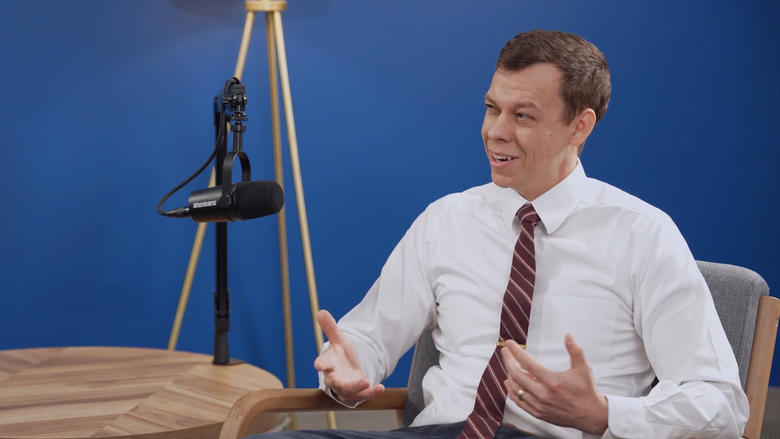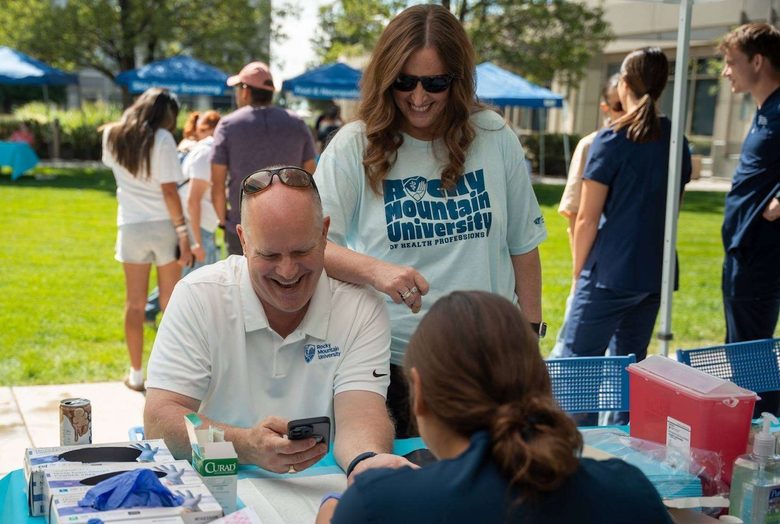
Generative AI is already in the optometry classroom as an on-demand tutor and in the clinic as a screening aid for diabetic retinopathy and glaucoma. Dr. Robert Roden, director of research at the College of Optometric Medicine at Rocky Mountain University of Health Professions (RMU), uses it to narrow the gap between students who arrive with the prerequisites and students who do not.
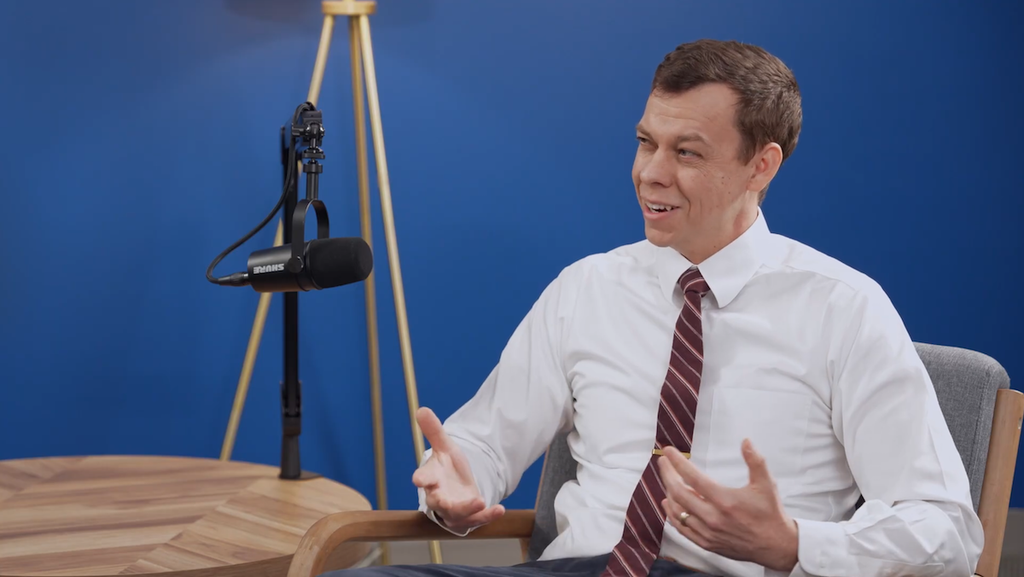
His rule, as he explained in an episode of “The Pulse Podcast,” is simple. The tool may explain and draft—as it’s done in this blog—but the student still must prove the knowledge with the tool set aside.
What He Means by the Tool
Dr. Roden’s working definition is narrow. Generative AI is software that has learned from large amounts of text or images and can produce a new explanation, draft, question set, or image classification on request. Current systems are strong at a defined task, such as explaining a term or flagging a retinal finding. They are not a substitute for a professor or a clinician.
He started using ChatGPT in late 2022 and early 2023, near the end of his PhD, after a professor kept querying it for quick answers. RMU faculty have adopted similar tools to meet student needs.
Where it Helps
Students enter the same course with uneven backgrounds. A single lecture cannot reset that.
“Everyone comes into a class with a different background,” Dr. Roden said. “Some of my students have taken prerequisites that are very helpful and some of them haven’t. I’m trying to use [AI] to normalize that and to make it so that everyone can come in and fill knowledge gaps and get on the same page.”
He points students to it in three situations:
- Mid-lecture, when a term does not land
- Outside class, when a concept needs a different framing
- As a basic tutor
Dr. Roden also has students feed a lecture or learning objective back to a model and ask it to quiz them. The pattern is personalized catch-up, not a second lecturer.
Where it Fails
Over-dependence is the main risk.
“Some students rely too much on it,” Dr. Roden said. “Sometimes they can rely so much on it that they don’t know what they don’t know. They get everything that they need from AI and then they don’t really integrate it. They don’t really learn from it. They just kind of use it as a crutch to get them through the next test.”
Source transparency is the second failure.
A fluent paragraph does not show where a claim came from, and a student who does not yet know what a correct explanation looks like is poorly placed to catch a bad one. In research and clinical education, an unsourced statement is not usable.
Detectors do not solve the integrity problem. Tools Dr. Roden has reviewed cannot reliably say, with high confidence, that an essay or homework submission was model-written. Suspicion alone is a weak basis for a penalty.
What Assessment Should Change
Because detectors are weak, he changes the assignment rather than the policing. An essay from a prompt is easy to outsource. A demonstration of the material or taking an exam is not.
“I care a lot more about what you can do, all tools aside,” he said. “You sit down, you take a test. Do you know the material?”
He does not ban generative help for drafts. The standard is editorial: Can the student remove what is false, unsupported, or misaligned with the learning objective, and still explain the result?
The skill is directing the tool, not hiding behind it.
Where it Shows Up in Clinic
Models trained on retinal images are being used to screen for diabetic retinopathy and glaucoma. A flagged finding still goes to a clinician for verification. Dr. Roden sees the near-term gain as access. In regions with few eye-care providers, including parts of Asia with high unmet needs, faster screening can put more people on a care path sooner.
The model widens the net. The clinician confirms the catch.
His answer to replacement fear is the same in the clinic as in the classroom. He gives students the Darwin line: It is not the strongest or the smartest that survive, but the most adaptable. A student who uses the model only to pass may eventually be replaced by it. A student who can combine judgment with the tool is harder to replace. [RR1] He ties that to the obligation to use every sound means of helping the patient.
What the Program Still Rewards
Universities cannot control how models are built. They can decide what their programs reward. Dr. Roden’s priority is personalization. He encourages the use of tools to find individual gaps and close them, so the cohort rises instead of only the students who arrived prepared.
What still distinguishes RMU’s optometry program, he says, is “the human element … how much we care about our students and how much they’re willing to go out of their way to reach the student and to help them succeed. It’s something that you can’t program.”
AI-Generated Takeaways
- Use Generative AI as an on-demand tutor for missing prerequisites, not as a replacement for the lecture.
- Use it at the moment of confusion, so one unclear term does not become a lost session.
- Do not treat detector scores as proof of misconduct.
- Assess what the student knows with tools set aside.
- Allow drafts while requiring the student to reject false or unsupported output.
- Sources for research and clinical claims are required.
- In eye care, let models screen for diabetic retinopathy and glaucoma, then have a clinician verify the flag.
- The durable skill is knowing the material well enough to direct the system. Otherwise, the system can eventually do the job alone.
(Editor’s note: This blog was produced with the assistance of Generative AI.)